
Our Measures for Managing Energy, Water and Vineyard Resources
As a family-run winery, we continually review and develop the way we work. Our measures include generating electricity on site, using modern heating and energy storage technology, maintaining our own water supply and implementing specific measures in our vineyards and across our estate. Here, we introduce eleven measures currently in place at our winery.
1. Electricity from Solar Panels
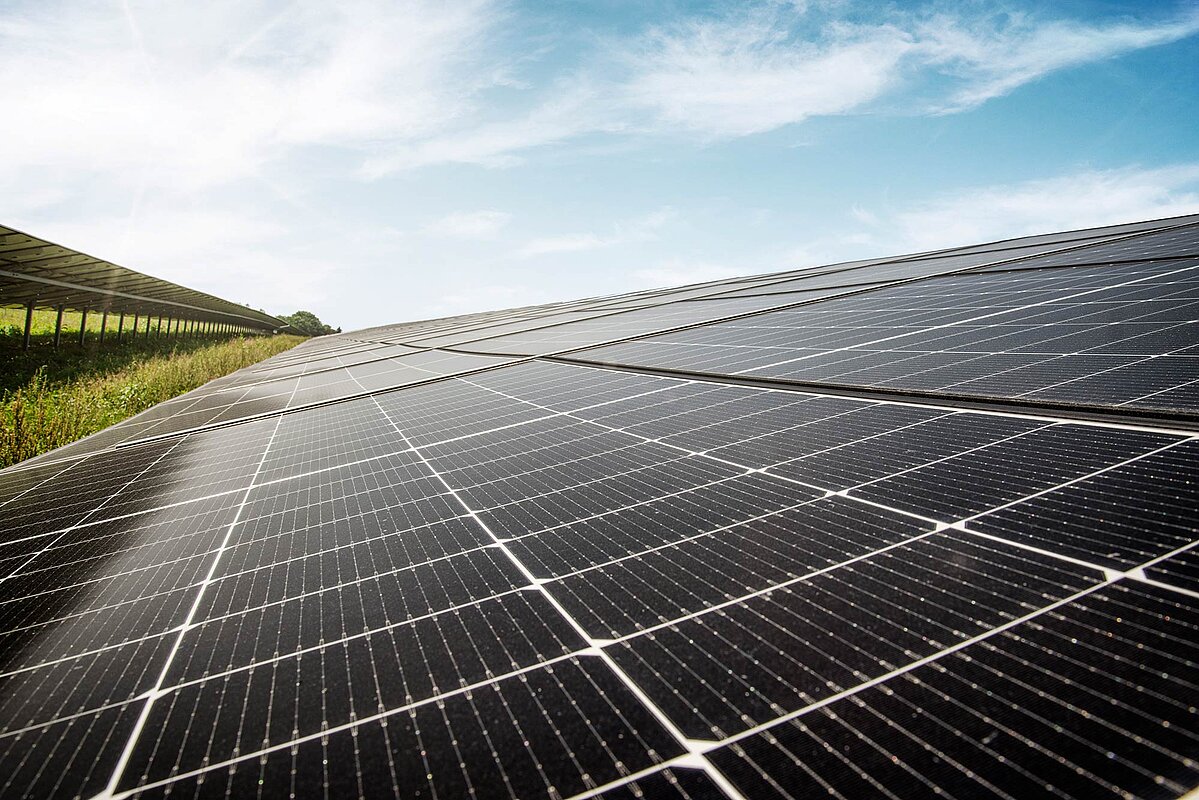
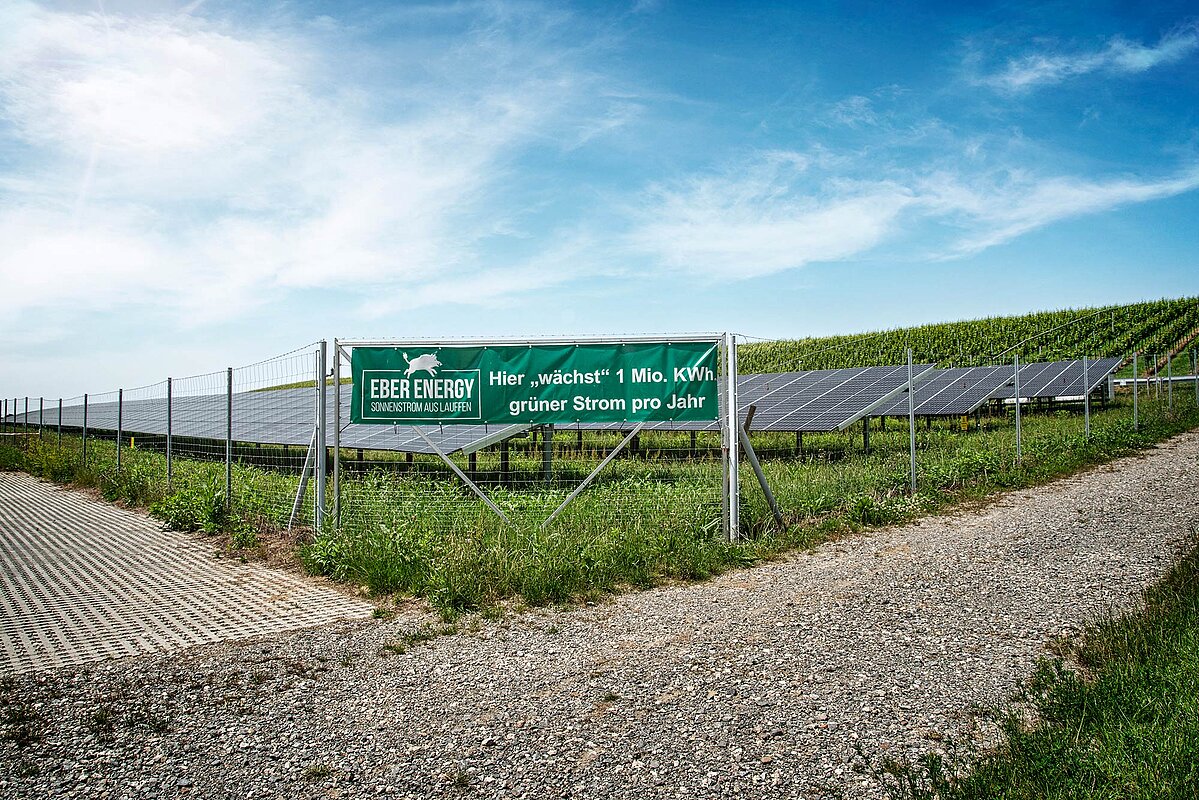
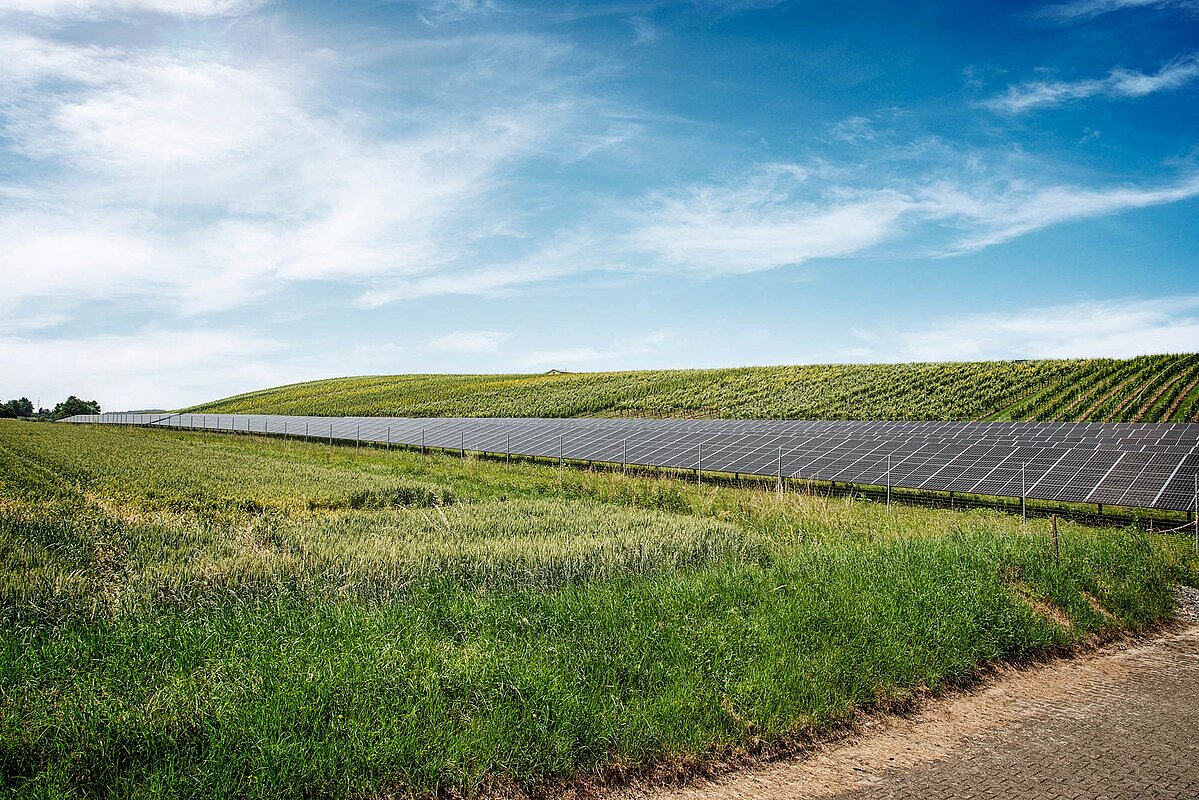
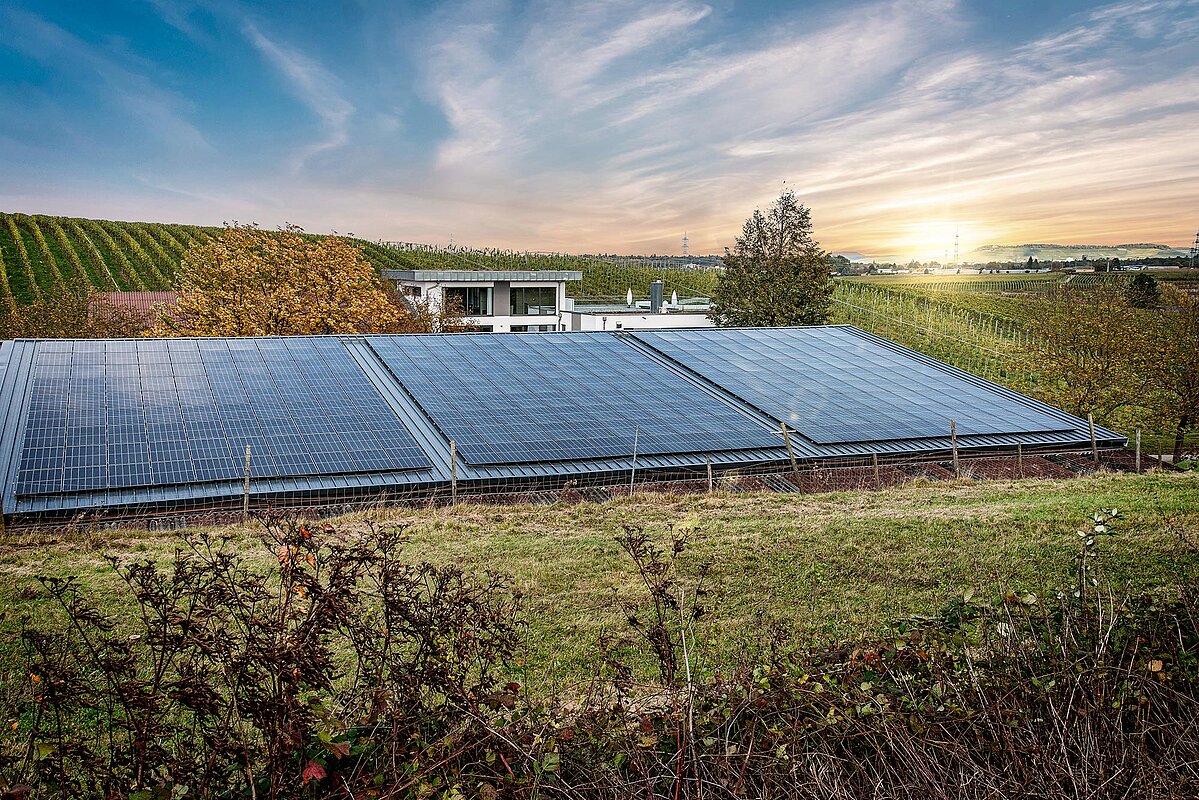
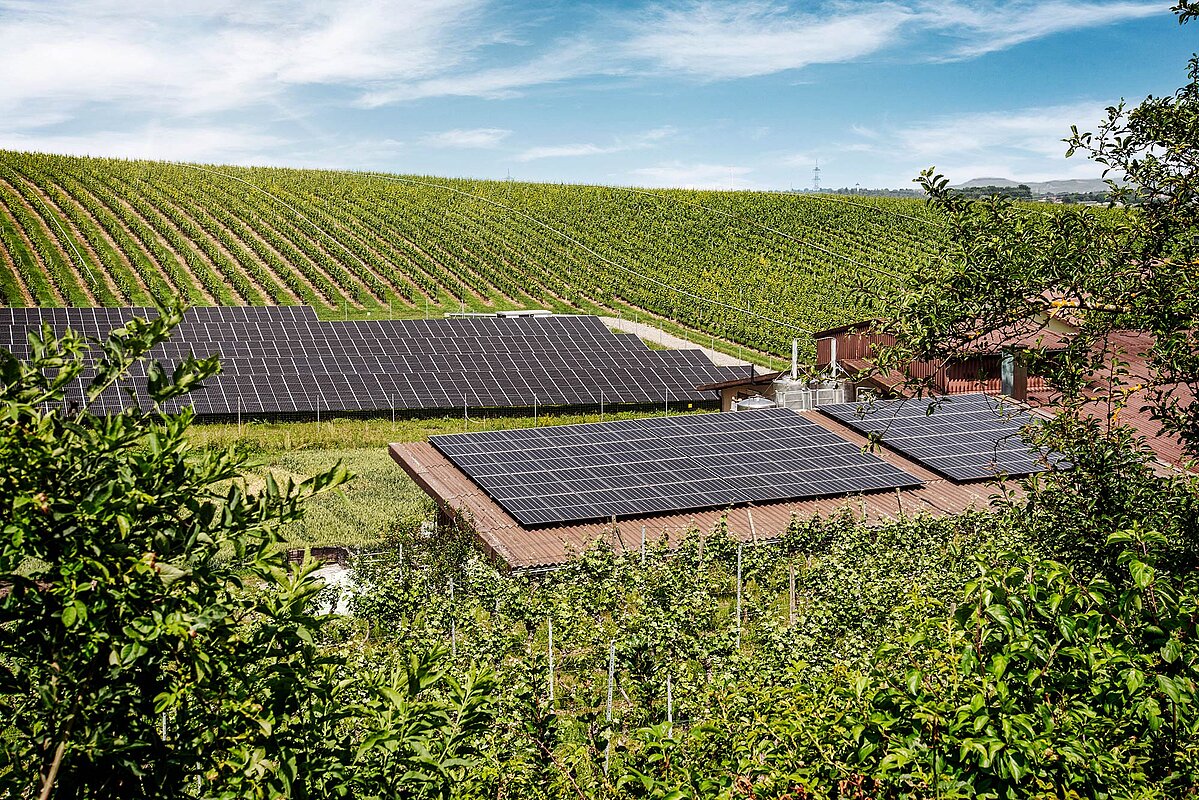
Our ground-mounted solar PV installation covers approximately 10,000 m². The site has 2,324 photovoltaic panels with a total installed capacity of 999.32 kWp. In a typical year, the installation generates approximately 1.1 million kWh of electricity.
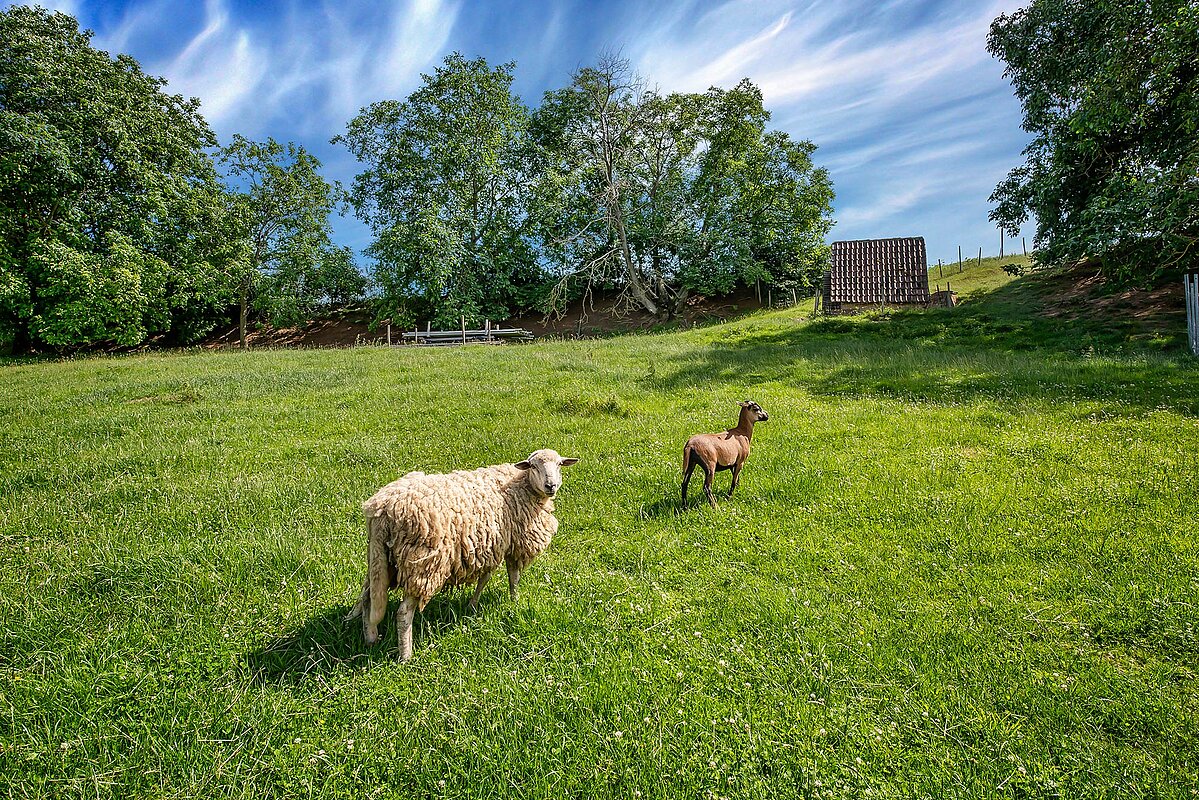
Our sheep graze the site, keeping vegetation between the panels short. As part of the installation project, the land, which had previously been used for arable farming, was converted into grassland. This conversion was credited with 70,453 ecological compensation points (Ökopunkte) under the German ecological compensation system.
The electricity generated is used to power our winery operations.
3. Our Own Spring Water – from the Rieder Spring
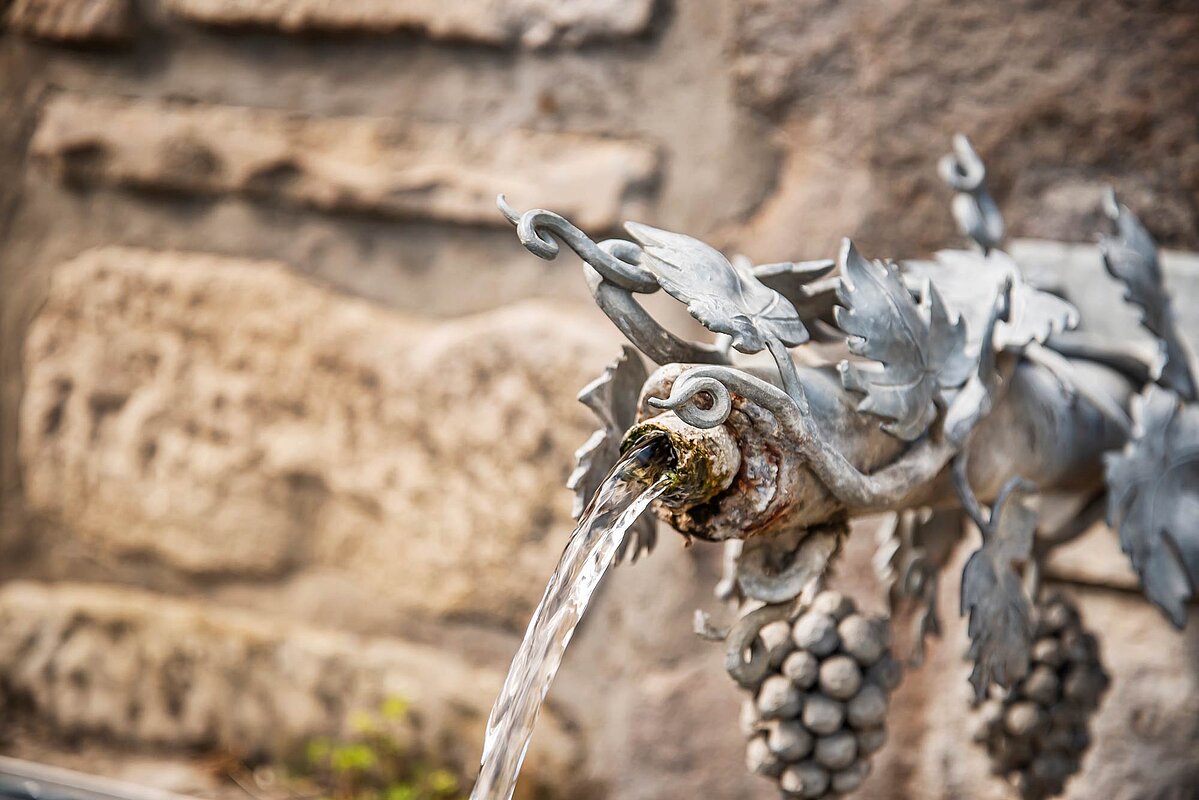
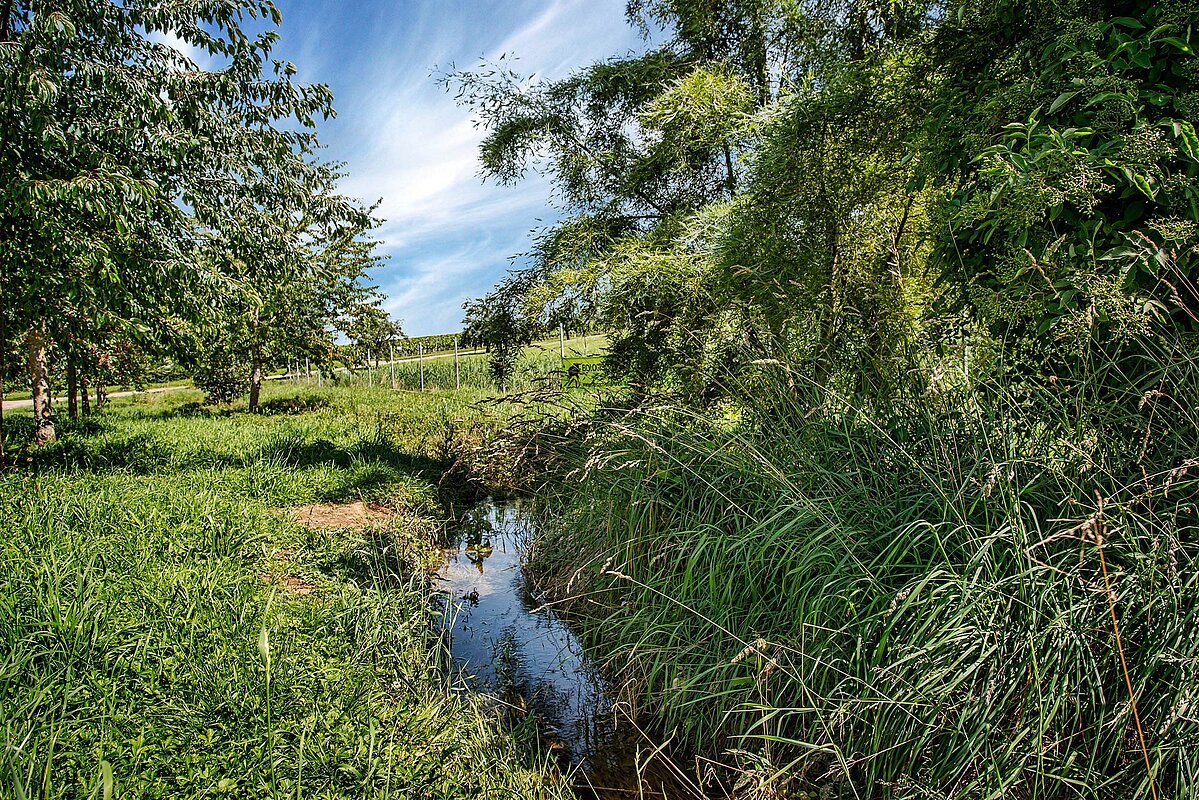
The Rieder Spring was discovered in 1953 by Friedrich Eberbach, the founder of our winery. We continue to use its water in various areas of our operations today.
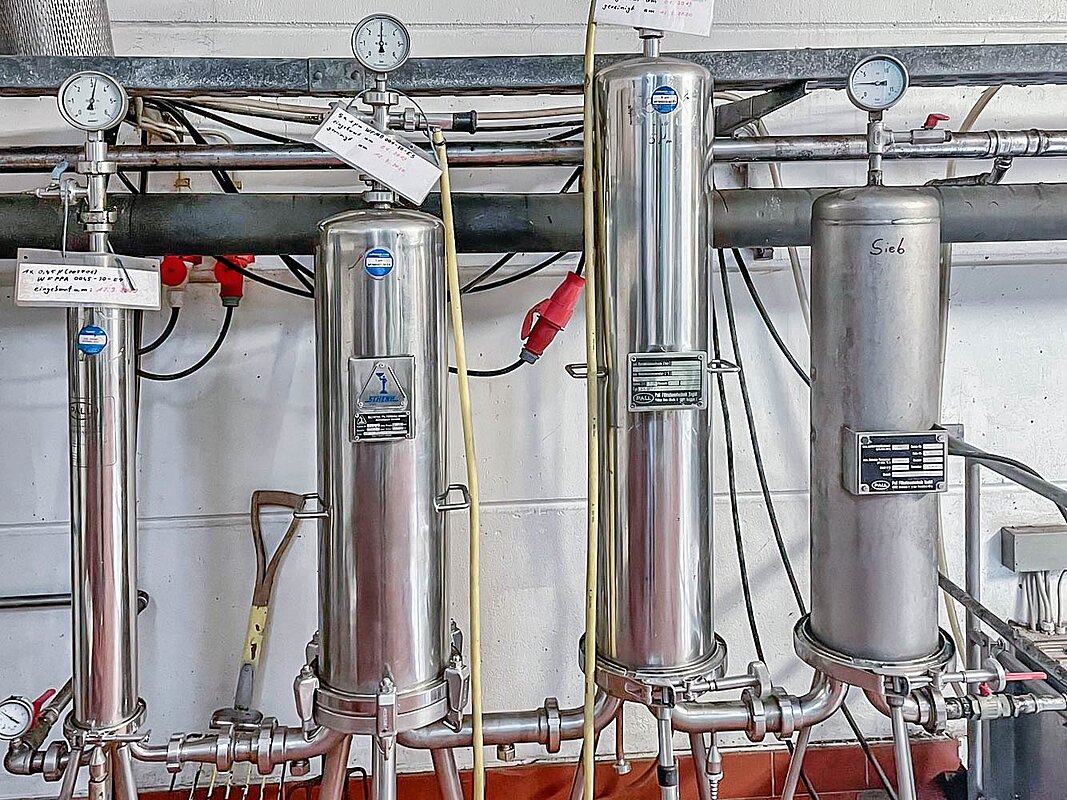
After treatment to remove limescale and filtration, we use the water as drinking water. It is also used for operational purposes, such as cleaning tanks and equipment in the cellar.
For more than 70 years, this spring has provided us with our own water supply for many areas of our winery.
5. Reed Bed Wastewater Treatment System
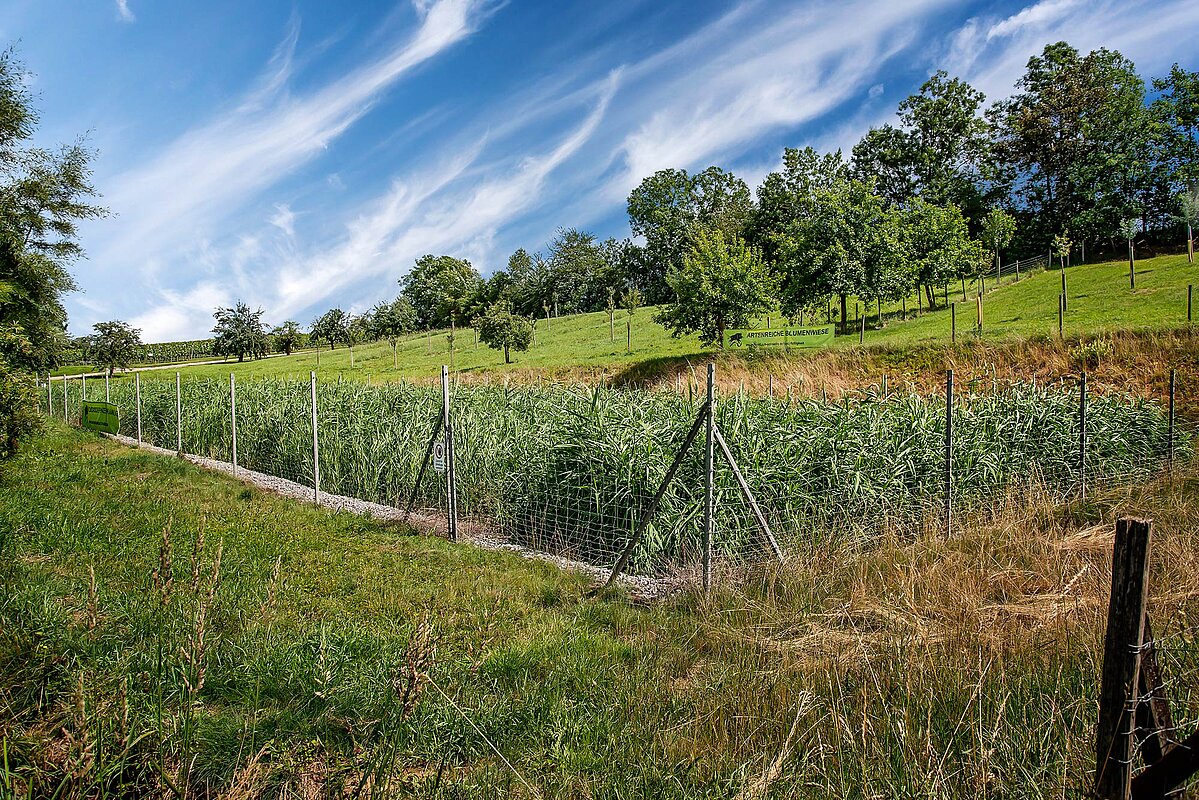
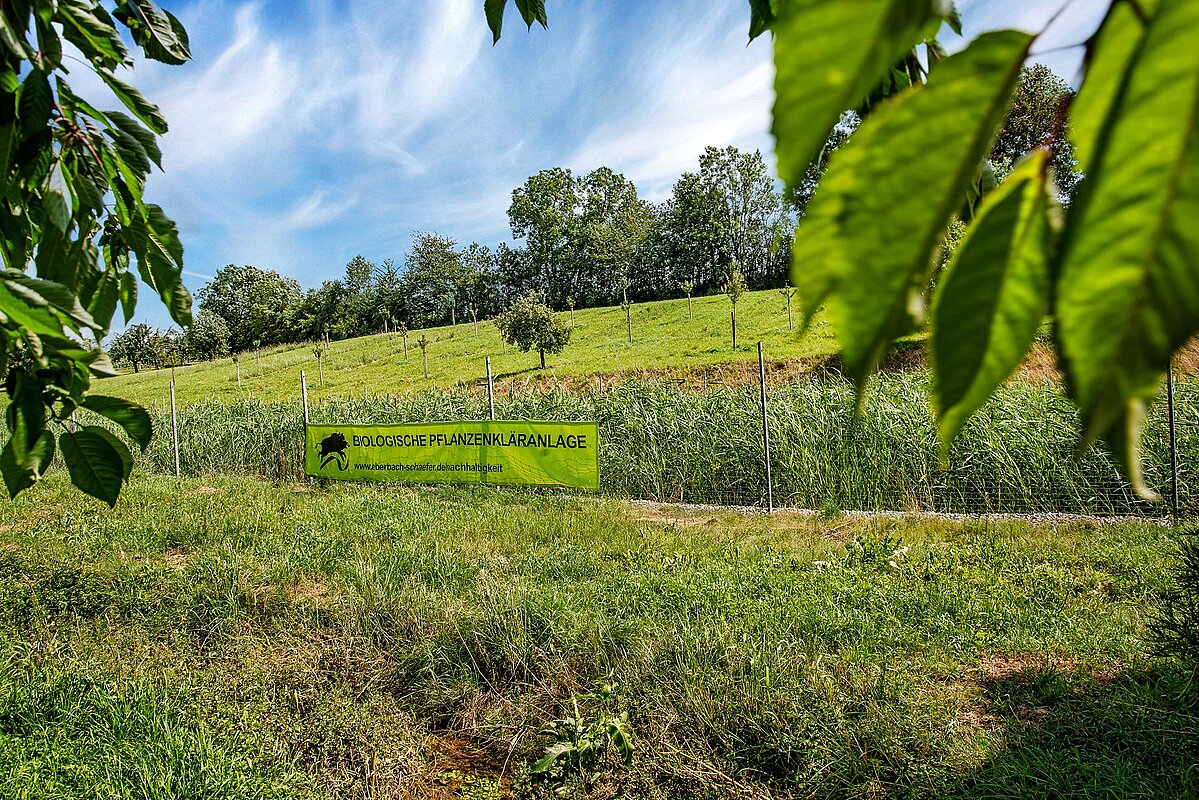
Wastewater generated by our winery is treated in our own reed bed wastewater treatment system. At the heart of the system is a reed bed measuring approximately 60 metres long, 12.5 metres wide and 1.6 metres deep. It contains around 1,060 tonnes of fine gravel, river gravel and sand.
The treatment process takes place in several stages. First, the wastewater passes through five primary settlement tanks. The pre-treated water is then distributed across the sand and reed bed through a drip irrigation system. Microorganisms within the substrate carry out much of the biological treatment, while the roots of the reeds spread throughout the bed. The reeds are regularly cut, composted and subsequently used in our vineyards. The treated water is discharged in accordance with the regulatory requirements applicable to our system.
The reed bed also provides a habitat for insects, frogs and other small animals.
7. Traditional Orchards - Care and Maintenance
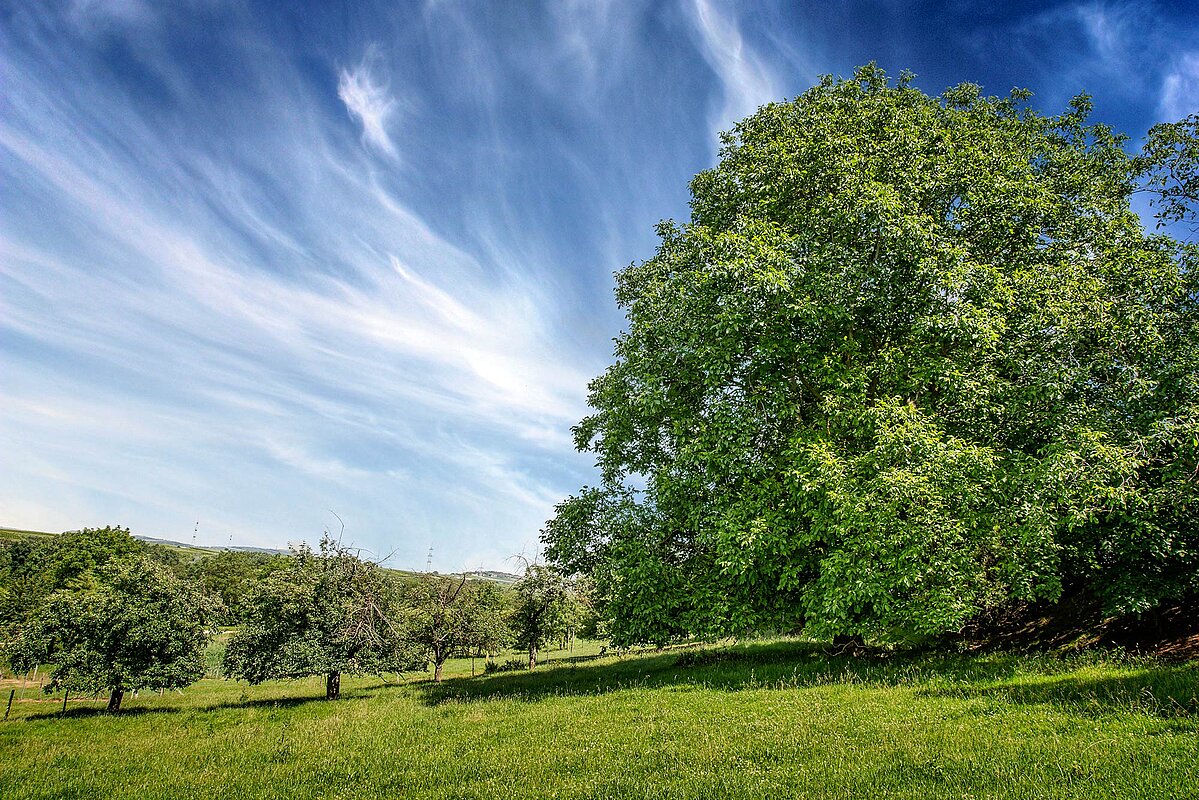
We maintain approximately three hectares of traditional orchards. Since 2016, we have planted more than 50 new fruit trees.
Our sheep also help maintain the grassland in these orchards.
Some of the fruit is processed directly at our winery. We use cherries, Williams pears and plums to produce fruit spirits, while our apples are made into naturally cloudy apple juice. We also use walnuts in our walnut rum liqueur.
Our traditional orchards therefore form part of both our agricultural land and our own production of raw ingredients.

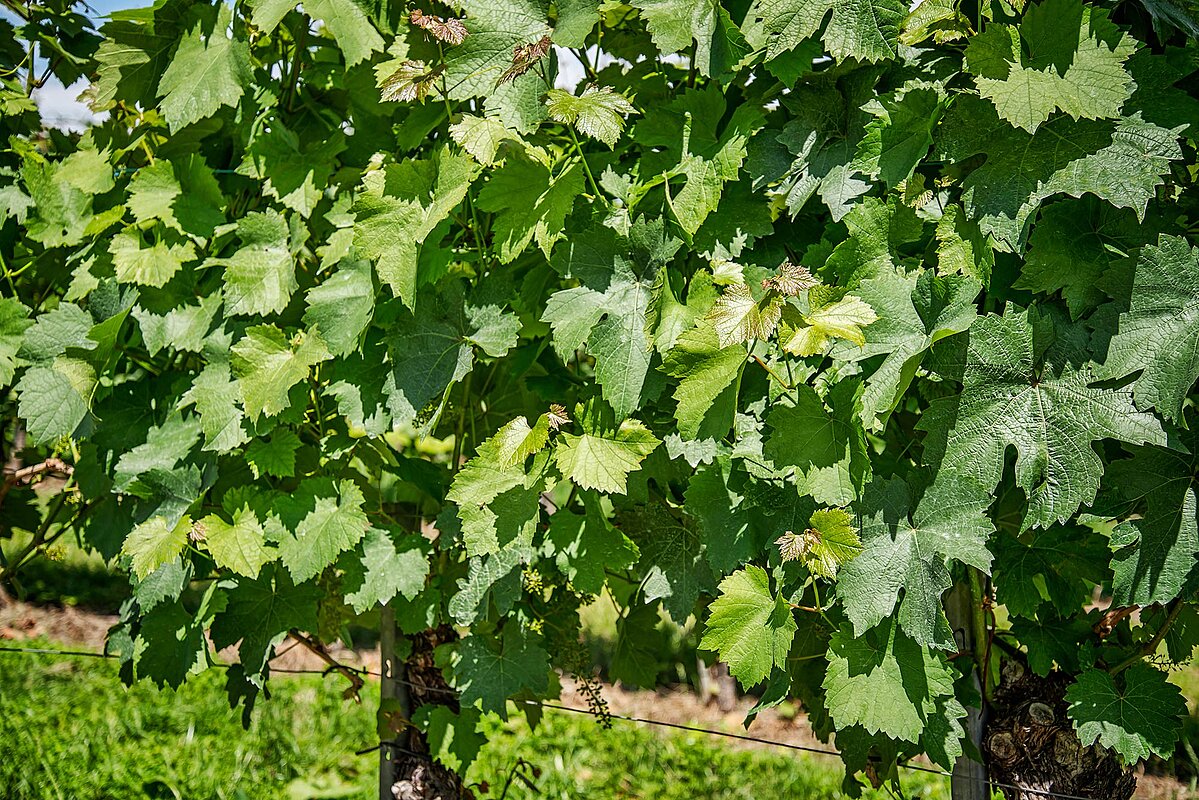
9. Pheromone Pest Control - Against Grape Moths
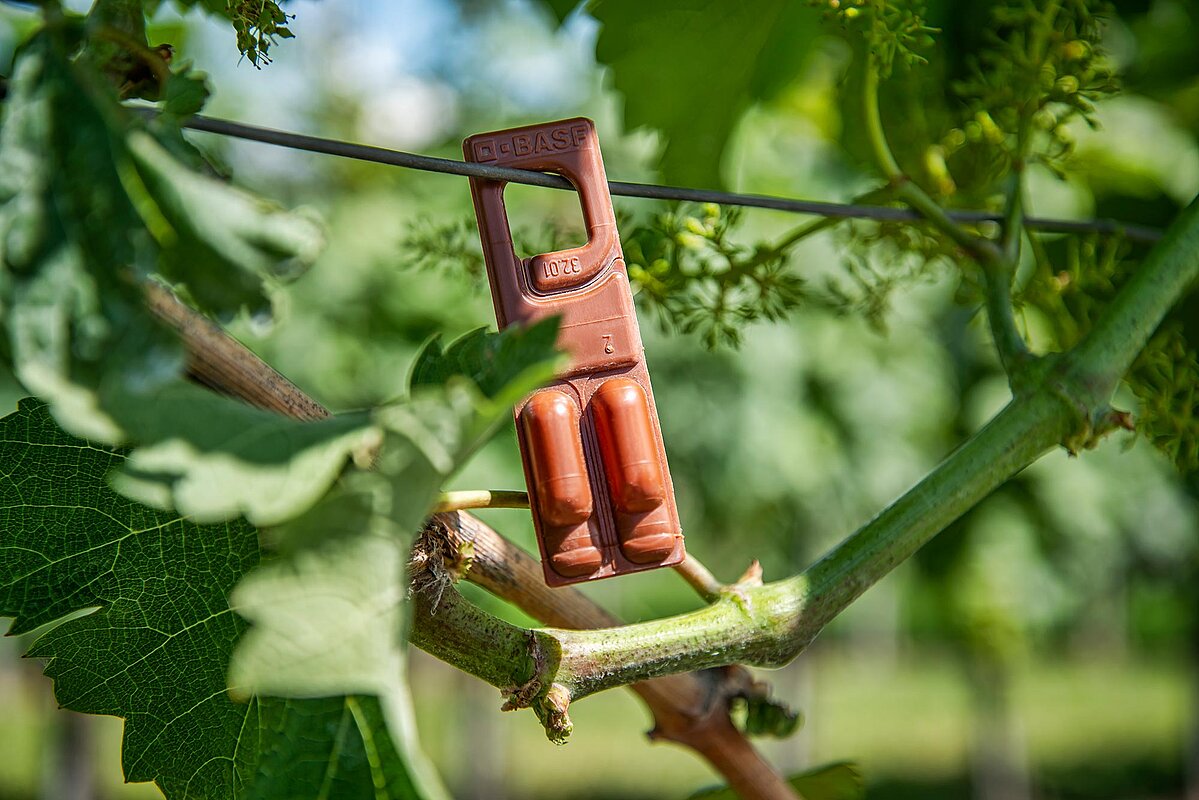
We use pheromones to control grape moths in our vineyards.
This method involves distributing synthetic versions of the female grape moths' sex pheromones throughout the vineyards. These make it more difficult for male moths to locate females, thereby disrupting mating.
By using this method, we do not need to apply insecticides to control grape moths.
11. Dry Stone Walls - Maintenance and Preservation
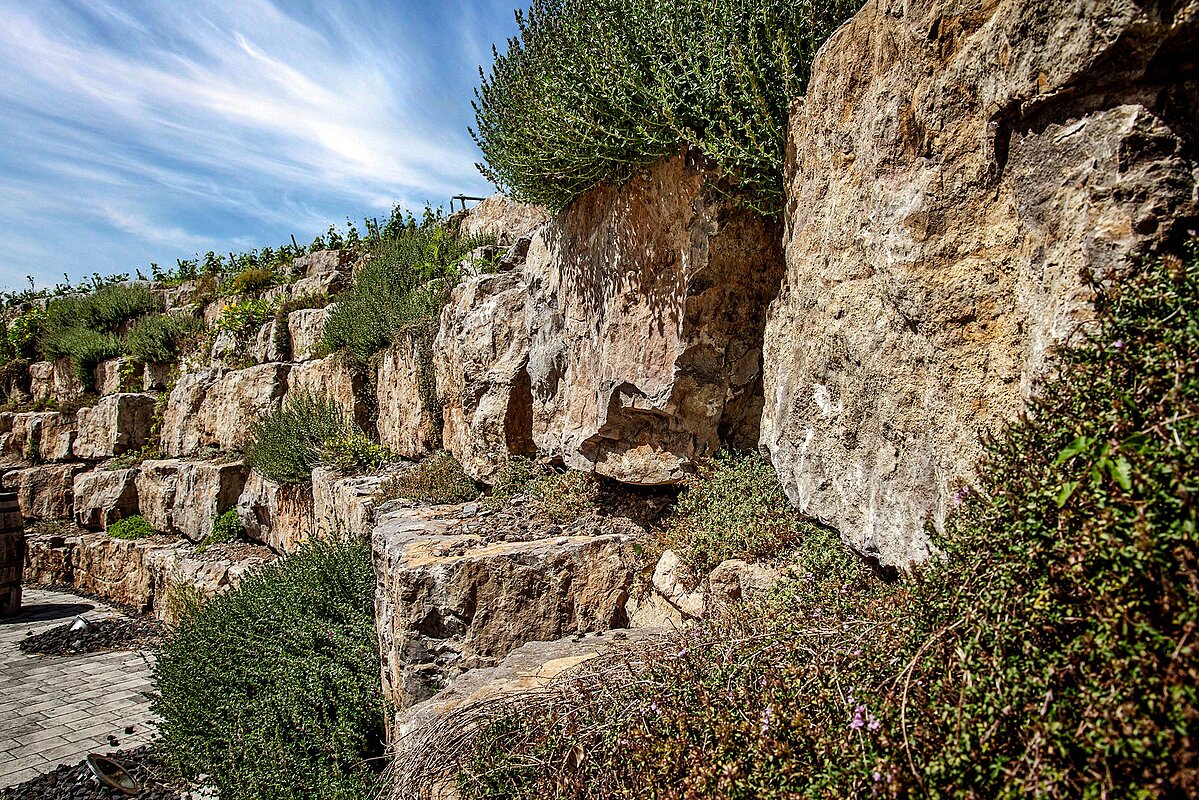
Dry stone walls have been part of our region's vineyard landscape for generations. They provide suitable habitats and places of shelter for wildlife, including common wall lizards.
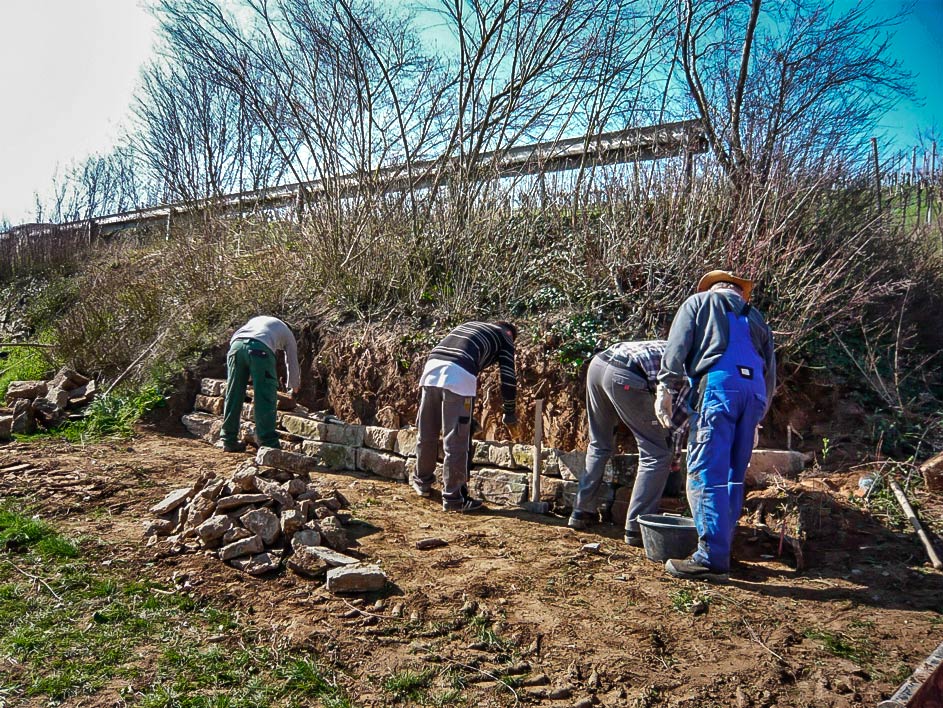
As part of a maintenance contract with the local district authority, we help preserve these traditional dry stone walls. This includes preventing excessive shading caused by the growth of trees and shrubs.
Damaged or collapsed sections are rebuilt using traditional dry stone construction methods, with stones carefully stacked without cement.
Concrete Measures, Not Vague Promises
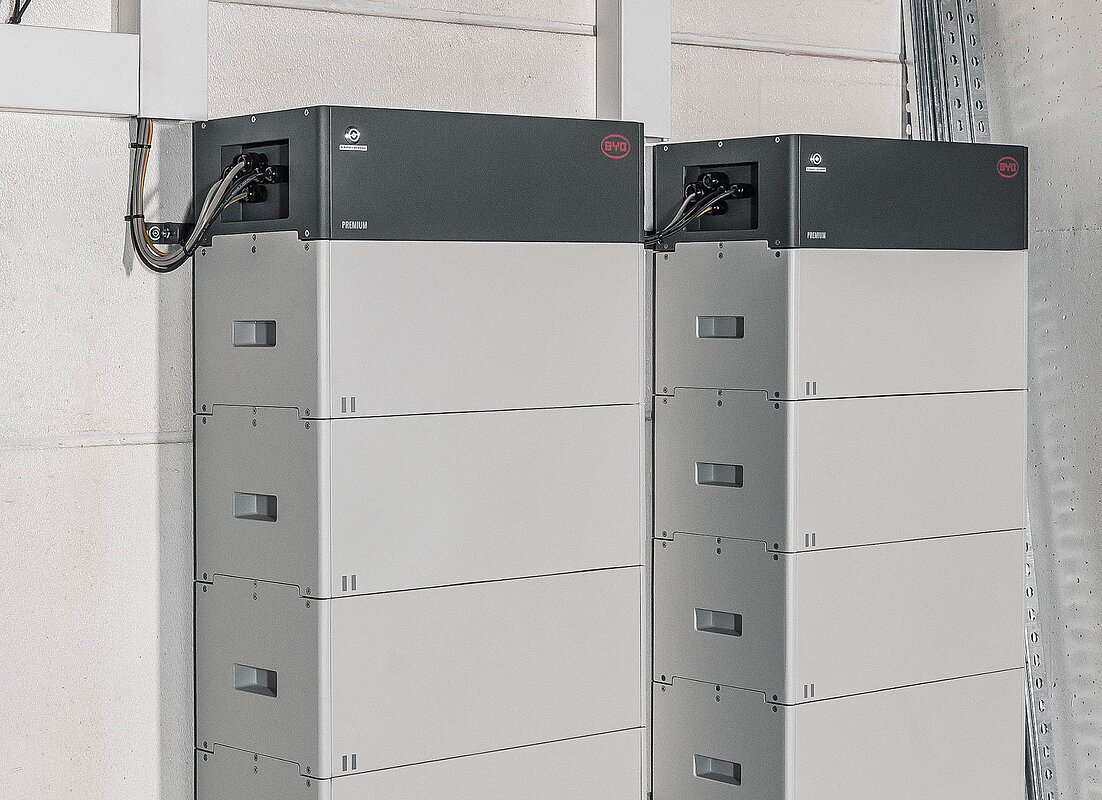
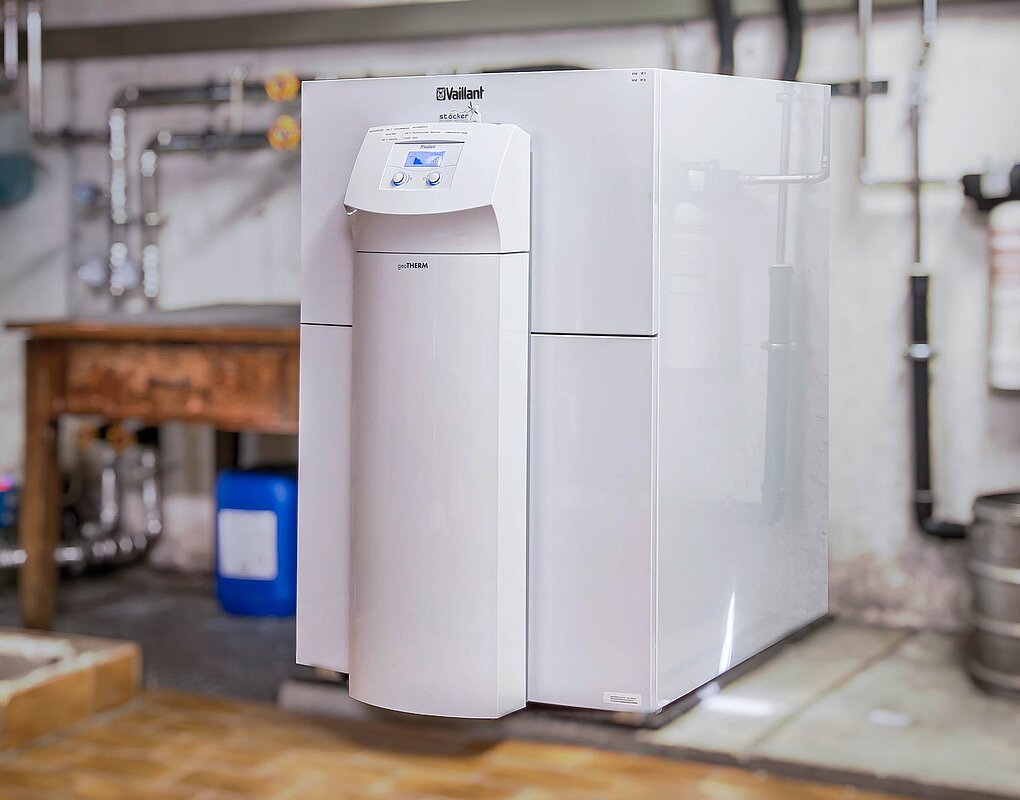
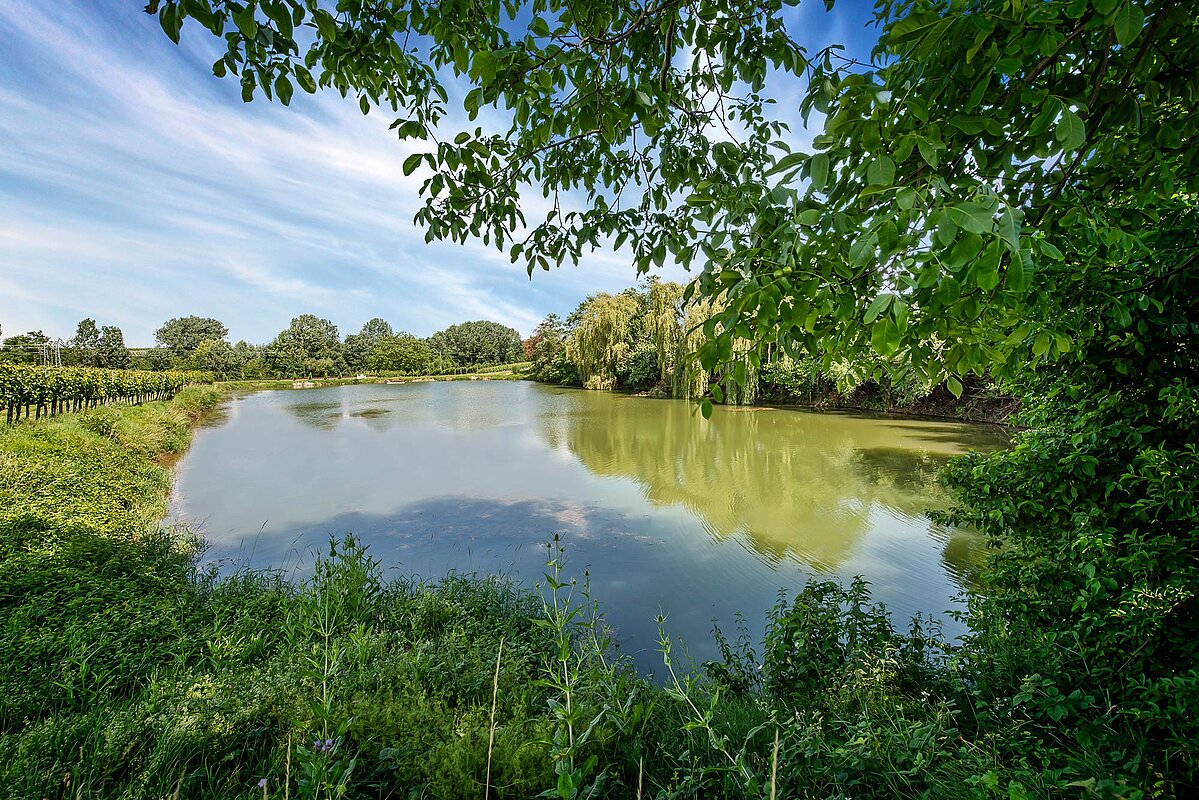
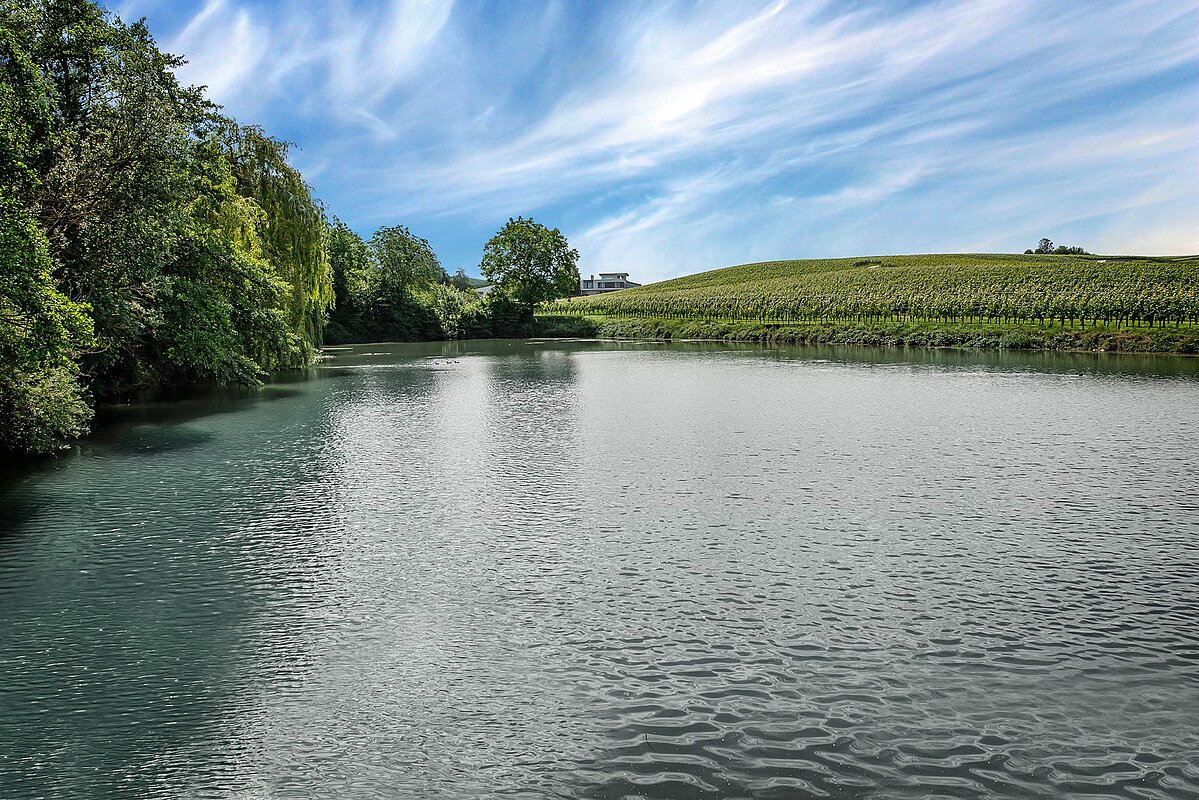
Our solar PV installations, battery storage systems, water-source heat pumps, independent water supply, reed bed wastewater treatment system and irrigation pond are all part of our day-to-day operations. So too are the measures we implement in our vineyards, traditional orchards and wildflower areas.
You can see many of these installations and areas for yourself when you visit our winery in Lauffen. We're happy to show you around and explain how things work, whether it's our reed bed wastewater treatment system, our irrigation pond or the use of pheromones to control grape moths in our vineyards.
Because we don't just want to tell you how we work – we'd be delighted to show you what we actually do.